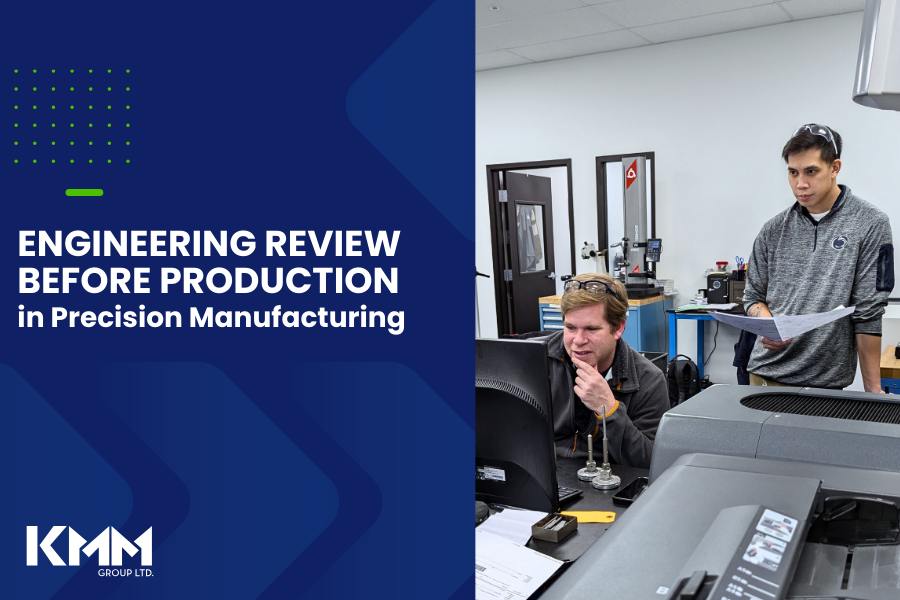
A drawing can look perfectly reasonable until someone tries to make the part.
An engineering review before production evaluates whether a component can be manufactured, inspected, and repeated reliably before release to the shop floor. It identifies hidden risks in geometry, surface finish, tolerance structure, and measurement strategy before scrap occurs.
Marcus Smith, Director of Manufacturing Engineering at KMM Group, has seen that happen many times. A component moves toward production with every dimension clearly defined. The tolerances appear achievable. The geometry seems straightforward.
Then the engineering review begins.
A surface finish requirement may increase scrap probability, while a radius defined only as a tiny arc can make inspection unstable. A tolerance may also force a manufacturing process that adds unnecessary complexity or introduces avoidable cost.
None of those risks are obvious on the screen. They emerge only when engineers begin evaluating how the part will actually be produced, measured, and controlled in production.
Before the first setup sheet is written, the engineering team evaluates how the component will be manufactured, how inspection will validate each feature, and how stable the process will remain as production scales.
This is where Design for Manufacturability (DFM) becomes a production plan.
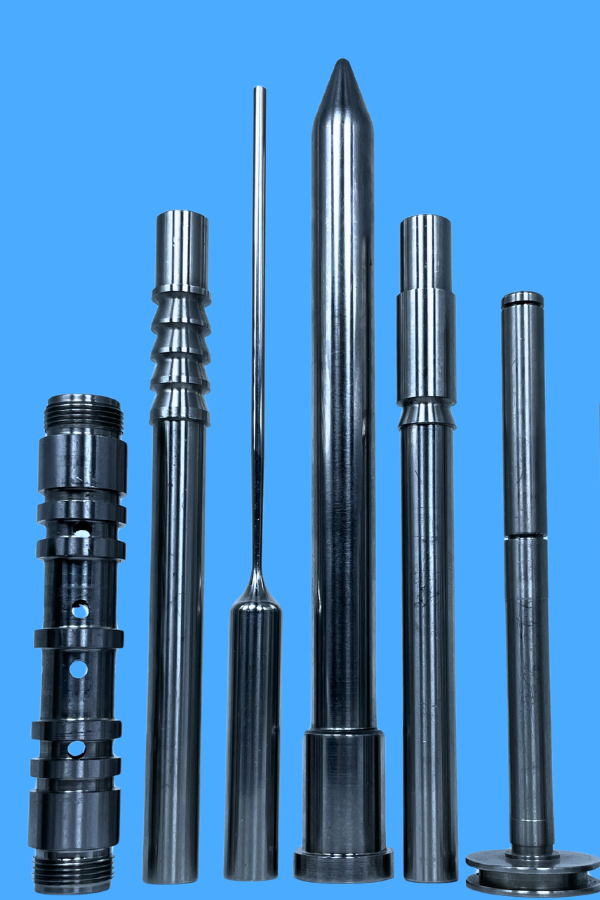
Surface Finish Risk in Production
In many cases, tight surface finishes look harmless on a drawing.
In production, they can introduce hidden scrap risk.
“You can run several good parts, then one chip scratches a surface and the part is done,” Marcus explains. “Overly tight surface finishes can cause scrap.”
A production engineering review reframes that requirement into a functional conversation. What truly affects performance? What drives cost without improving outcome?
This is where DFM shifts from spec compliance to engineering judgment.
Measurement Feasibility and Inspection Stability
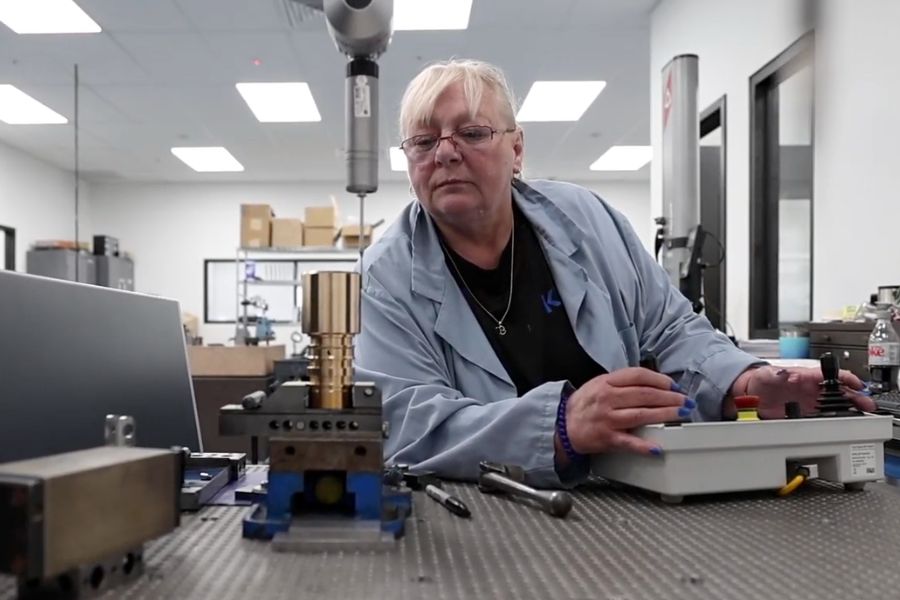
At this stage, inspection capability plays a critical role in production readiness.
Marcus uses a simple analogy.
“Imagine trying to determine the size of a whole pizza from a single thin slice. Not a quarter. Not even an eighth. Just a narrow sliver of crust and cheese.”
Marcus explains how measurement uncertainty can masquerade as manufacturing failure.
“If you measure a full circle, you can get extremely accurate results. But if the print calls out a radius that exists as only a tiny arc, your measurement can swing wildly. The machine may claim the feature is off by an inch and a half when the process itself can’t physically move that far.”
This is one reason inspection feasibility is central to an engineering review before production. It examines whether features can be measured repeatably and whether inspection results will remain consistent during scale.
If inspection can’t validate a feature reliably, production can’t confidently demonstrate compliance.
The Advantage of Integrated Machining and Grinding
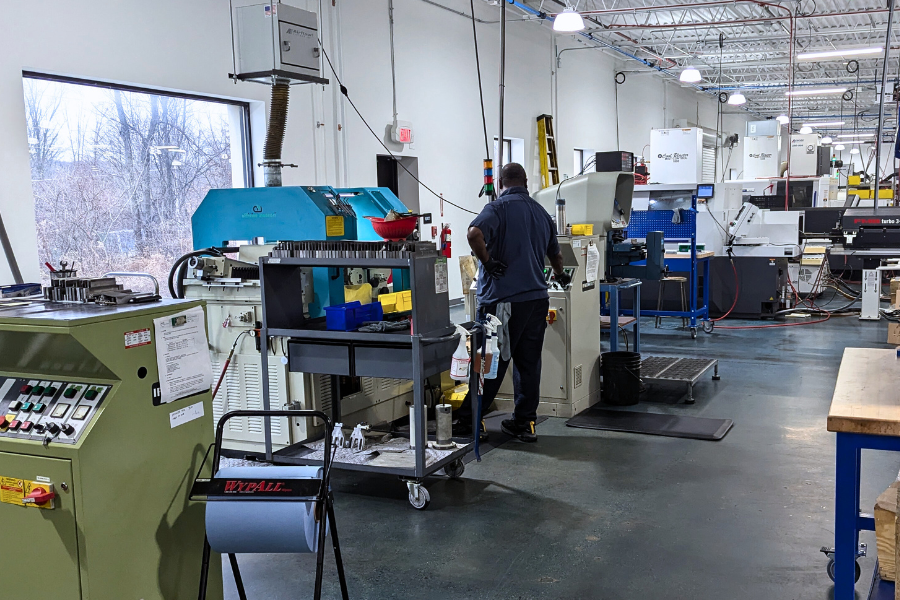
The engineering review also determines which manufacturing processes best support the design.
Marcus previously worked in shops where grinding required outsourcing. That constraint shaped decisions.
With machining and grinding under one roof at KMM, engineering can evaluate both options without bias.
“We don’t have that constraint,” he says. “The team can simply walk across the aisle.”
This proximity allows engineers to consult grinding specialists during the manufacturing feasibility review, evaluating:
- stock allowance
- surface finish effects
- process stability
- dimensional control
Instead of relying on assumptions, engineers collaborate directly with the people running the equipment.
From Engineering Plan to Production Control
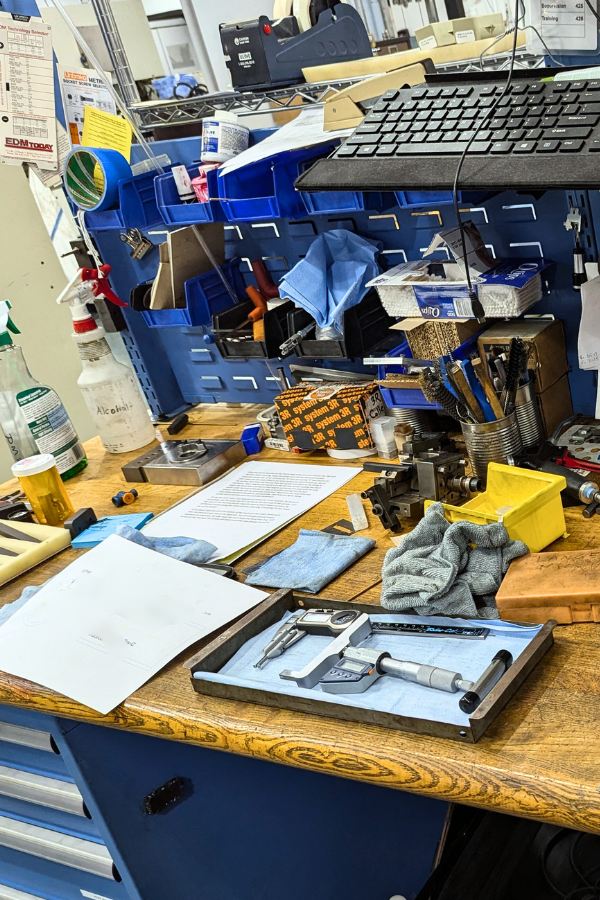
Once feasibility is confirmed, the engineering review transitions into documentation that protects repeatability.
Marcus defines engineering excellence simply: “Making things easier downstream.”
That means:
- detailed process plans
- setup instructions
- work-center operation drawings
- tolerance responsibility at each stage
Operation drawings are separated by department so each team focuses on the tolerances relevant to its work. That structure strengthens clarity as production scales.
Connecting Design with Manufacturing Physics
“There was a time,” Marcus says, “when aerospace engineers were asked to work in a machine shop for a couple of years before they ever released their first drawing.”
Those engineers learned how materials behave, how fixtures influence geometry, and how inspection methods affect tolerances.
Today, as MedTech evolves and Space Exploration advances, designs are becoming more complex and expectations are higher.
Modern CAD environments produce clean features, sharp corners, and tight tolerances. But the screen doesn’t show tool deflection, workholding challenges, or measurement instability.
Engineering reviews before production reconnect design decisions with those physical conditions.
That process gives design engineers what aerospace engineers once gained by standing in a machine shop.
Perspective.
Collaboration That Strengthens the Design
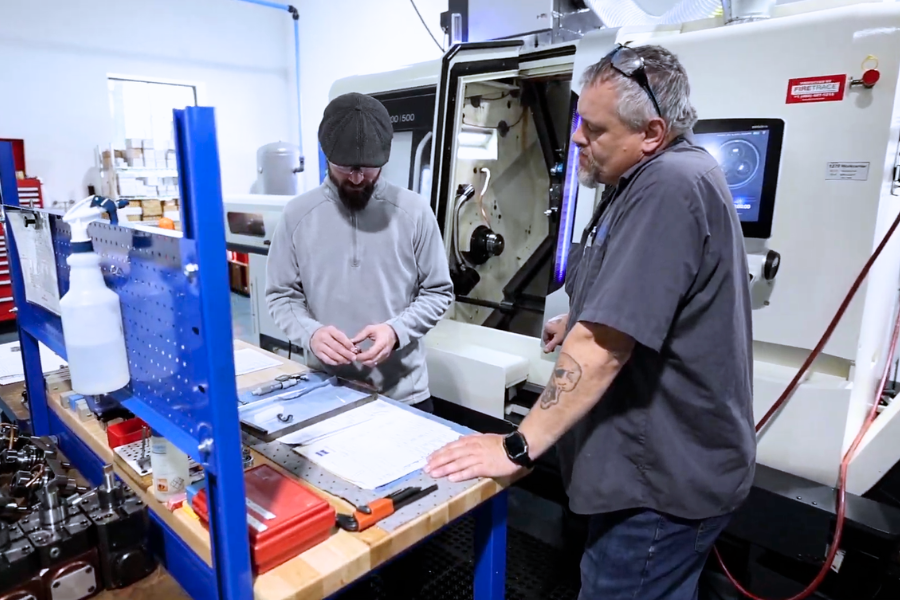
Strong DFM is collaborative.
“I’m starting to see more customers willing to engage earlier,” Marcus says. “Arranging a DFM call before sending a print can eliminate a lot of headaches before we even start a quote.”
Many DFM conversations take thirty minutes. Screen shared. Questions asked. Assumptions clarified.
The result is not a sales pitch.
It’s engineering alignment.
In industries where tolerances are tight and failure is expensive, alignment matters.
If your component includes tight tolerances, difficult finishes, or multi-process requirements, an early engineering review can prevent costly surprises before production begins.
FAQs
An engineering review before production is a manufacturing feasibility evaluation performed after a purchase order is received but before a job is released to the shop floor. Engineers evaluate manufacturability, inspection strategy, and process capability to ensure the part can be produced consistently.
A manufacturing engineering review typically evaluates:
- machining and grinding processes
- tolerance structures
- surface finish requirements
- inspection feasibility
- measurement stability
process capability during production ramp-up
If a feature cannot be measured reliably, compliance cannot be validated consistently. Engineering reviews ensure inspection methods are stable and repeatable before production begins.
Engineering reviews identify potential issues such as unstable tolerances, difficult surface finishes, or inspection challenges before manufacturing begins. Resolving these issues early reduces scrap, delays, and rework.
When machining and grinding capabilities exist within the same facility, engineers can evaluate multiple manufacturing strategies quickly. Collaboration between machining and grinding teams improves process planning and manufacturing stability.
Design for Manufacturability often begins during quoting. An engineering review before production happens after order release, when engineers validate manufacturing methods, inspection strategy, and process repeatability before machining begins.