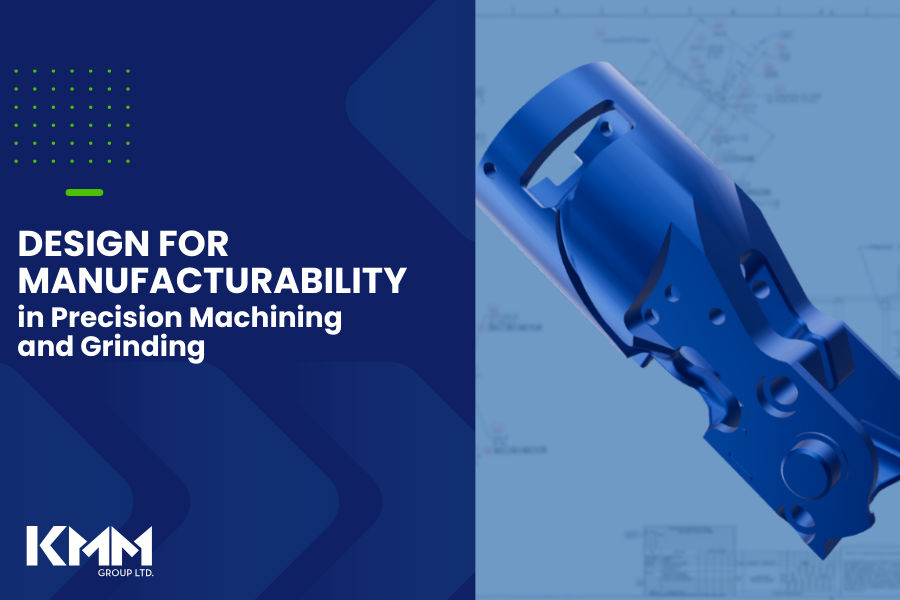
A request for quote arrives with a drawing. The clock starts.
Design for Manufacturability (DFM) takes shape in that first review. Geometry is examined alongside tolerance structure, inspection requirements, and process capability. Surface finish notes gain practical meaning. Feature relationships are checked against tooling access, workholding stability, and measurement reliability.
Marcus Smith, Director of Manufacturing Engineering at KMM, leads this transition from pricing assumptions to production reality.
“Customers love hiding hidden requirements in the purchase order,” he says. “Inspection requirements, approved supplier lists, no-change clauses, all sorts of fun, hidden goodies buried in the terms and conditions.”
DFM starts by surfacing those details. It verifies revision control, clarifies tolerance intent, and evaluates whether the proposed process can hold up under real-world production conditions.
What is Design for Manufacturability?
Design for Manufacturability (DFM) is an engineering review process that evaluates whether a part’s geometry, tolerances, materials, and inspection requirements can be produced reliably in a real manufacturing environment. In precision machining and grinding, DFM aligns CAD design intent with manufacturing physics, ensuring a component can be produced repeatedly, inspected consistently, and scaled without unnecessary production risk.
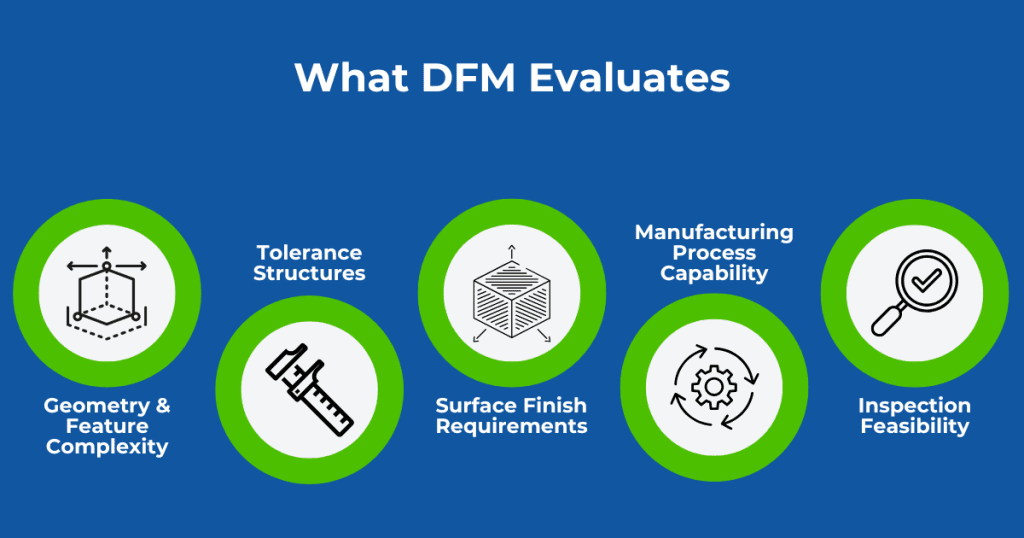
Design for Manufacturability evaluates several factors before production begins, including:
- geometry and feature complexity
- tolerance structures
- surface finish requirements
- manufacturing process capability
- inspection feasibility
In practical terms, DFM for precision machining and advanced grinding aligns design intent with real-world process capability. It connects CAD geometry to cutting forces, grinding wheels, workholding, and measurement physics.
When Design for Manufacturability Begins
DFM During Quoting Before Cost Is Locked
When design engineers involve manufacturing teams early, DFM influences cost structure and lead time before a purchase order is issued.
Engineering teams examine several factors during the quoting phase:
- Tolerance stack-ups
- Surface finish requirements
- Thin-wall geometry
- Corner conditions
- Material selection
- Process feasibility
The team determines whether a feature forces wire EDM instead of milling, whether tolerance structures threatens assembly fit, or whether surface finish requirements may increase scrap risk during ramp-up.
“Risk reduction is the number one objective,” said Marcus. “Cost is probably right behind it.”
Why DFM Matters Before Production Begins
DFM matters before production begins because once manufacturing is underway, changes become exponentially more expensive and disruptive.
Software produces perfect geometry. The shop floor introduces:
- Tool pressure
- Workholding variation
- Chip formation
- Thermal movement
- Inspection instability
Without a DFM engineering review, these variables surface during ramp-up, where they become scrap, delay, or rework.
DFM restores the feedback loop between design and manufacturing. It anticipates variability before it becomes failure.
Where Small Design Adjustments Change Everything
“It’s much easier to make parts in software like SolidWorks than it is in real life,” Marcus says.
A familiar example involves internal corner geometry.
The Fillet Problem
“The fillet tool in SolidWorks is the bane of every machinist’s existence,” Said Marcus.
Fillets influence machining strategy more than many designers realize. Sharp internal corners often require wire EDM. Adding even a small radius can expand the range of manufacturing options.
Marcus offers a common example. A window on a part specifies dead-sharp internal corners. That requirement locks the part into wire EDM.
“But with a simple phone call asking if we can actually have a 30-thousandths radius? Now it opens up some possibilities.”

That small design change can allow milling instead of EDM. Lead time may improve. Production may shift to a department with greater capacity.
DFM for precision machining and grinding often hinges on these small decisions.
KMM engineers present those options clearly and allow the customer to decide.
“We try to leave it up to the customer because they know best how the part is used,” said Marcus.
The Next Stage: Engineering Review Before Production
Once a purchase order is received, the DFM conversation moves deeper.
Engineering teams begin a detailed manufacturing feasibility review, evaluating surface finishes, inspection stability, and production process capability before the job is released to the shop floor.
That engineering review is where manufacturability decisions become production plans.
FAQ
Design for Manufacturability (DFM) is an engineering review process that evaluates whether a part’s geometry, tolerances, materials, and inspection requirements can be produced reliably in a real manufacturing environment. In precision machining and grinding, DFM aligns CAD design intent with manufacturing physics before production begins.
DFM can occur during both the quoting stage and after a purchase order is issued. Early engagement during quoting helps clarify cost drivers and manufacturing options, while post-PO DFM confirms feasibility and production readiness before manufacturing begins.
Industries such as MedTech, aerospace, and space exploration require extremely tight tolerances and strict regulatory compliance. DFM reduces production risk by identifying tolerance conflicts, surface finish risks, and inspection challenges before production begins.
DFM reduces scrap by identifying design features that introduce instability in machining or inspection. Examples include extremely tight surface finishes, difficult corner geometry, or tolerance structures that cannot be measured consistently during production.
Small adjustments such as adding a fillet radius, adjusting tolerances, or modifying feature geometry can dramatically expand manufacturing options. These changes may allow milling instead of EDM, reduce cycle time, and improve production stability.