What is Technical Grinding Sales?
The Difference Between Selling Capacity and Protecting Outcomes
The print usually looks fine.
Dimensions are there. Tolerances are tight. Angles and diameters are called out. On paper, everything appears ready to move forward.
But choosing a precision grinding partner involves more than reviewing a drawing and waiting for a quote. The success of a grinding project is often decided earlier, in the first conversation, before pricing, routing, or scheduling ever begins.
That moment is where Steve Dierkes, responsible for Technical Grinding Sales, comes into the process. With years of hands-on grinding experience, he approaches each request for quote by looking beyond the print to understand how a part will behave in the real world. Material condition, length, surface finish, inspection requirements, and downstream constraints are evaluated early, before assumptions turn into problems. That early clarity protects both cost and quality once production begins.
It’s why Steve treats the first conversation as the foundation for everything that follows.
From the Floor to the Front Door
Why Grinding Experience Changes Customer Conversations
Steve didn’t enter manufacturing as a master plan. He went to school for music. When that path didn’t immediately turn into a career, he started out at M&S Centerless Grinding in shipping and receiving. From there, he worked his way onto the shop floor, learning different machines, different processes, and different ways things can go sideways when assumptions slip through.
Grinding became his world.
After more than a decade running jobs, he understood something that’s hard to explain unless you’ve lived it. Grinding parts means managing everything that comes with it. Incoming material. Straightness. Surface finish. Length. How the part is going to behave as you push it toward tighter and tighter limits.
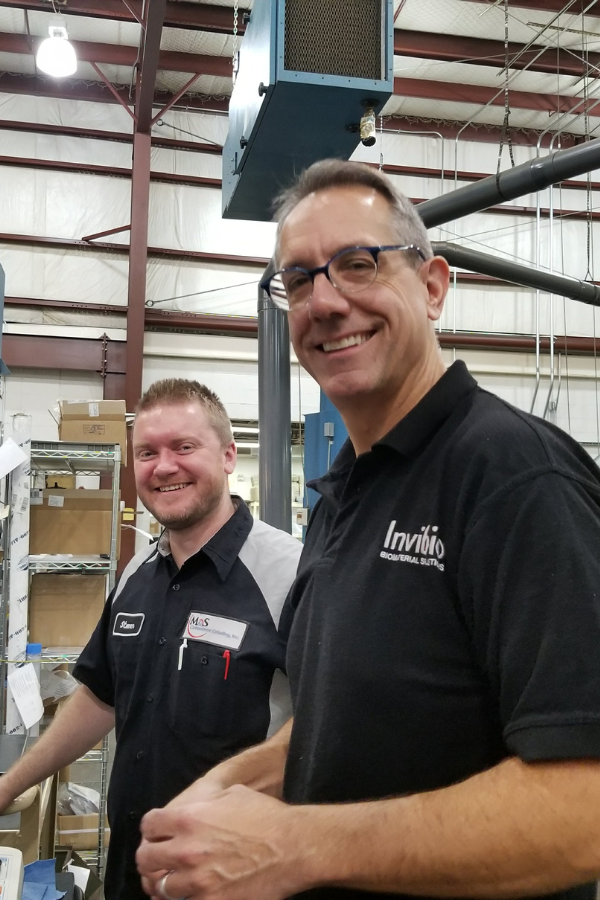

But when KMM CEO, John Shegda asked him to move into a sales role, Steve hesitated. His previous experiences outside manufacturing had left him wary of anything labeled “sales.”
What changed didn’t happen at work.
It happened at a dinner for his dad’s 60th birthday. The Powerball was up to a record number, and like everyone else, they were talking about what they’d do if they won. At one point, the waiter chimed in. He said that even if he hit the jackpot, he’d still be working there. Not because he had to, but because he liked forming relationships with customers and trusted his team to keep putting out food that made people want to come back.
That moment stuck.
Steve realized that John wasn’t really asking him to do sales at KMM in the way he’d experienced it before. It was relationship-building. It was understanding what someone needed, taking care of them, and letting the work speak for itself.
The work took on a clear sense of purpose.
Grinding Isn't Magic
Why Upstream Assumptions Shape Grinding Results
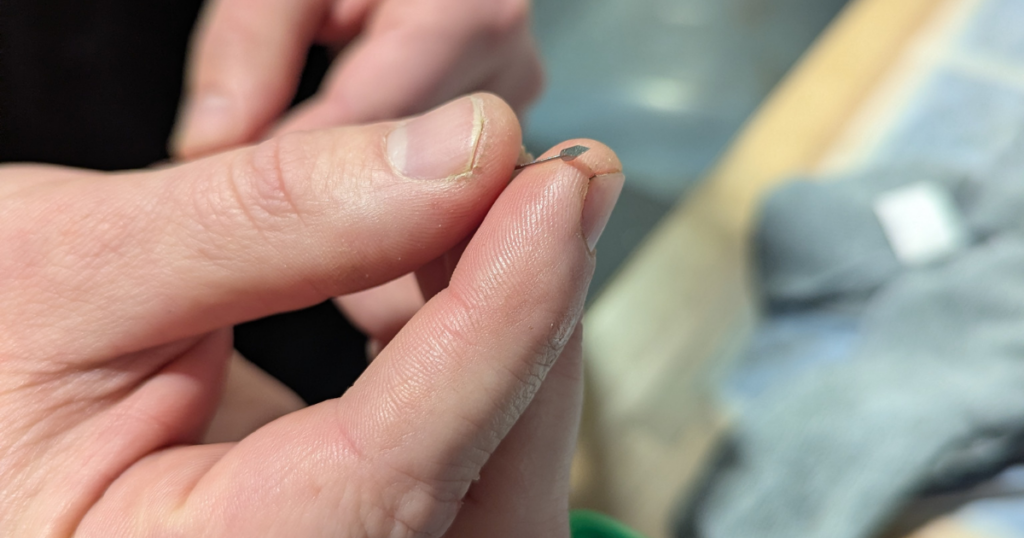
Steve says this often, usually after someone assumes grinding can fix anything upstream.
“There’s this notion that grinding is black magic,” he explained. “That you can just send some bent rods and we’ll fix it.”
He pauses when he says that. Because he’s seen what happens when expectations don’t match reality.
Grinding can do amazing things. But it’s conditional. Trying to hold two tenths on an OD across a six-foot length isn’t just about skill or equipment. It depends on the material. The starting condition. The function of the part. The foundation you’re starting from.
“A strong foundation is key to having your best results,” Steve said. “The better of something we get in is going to make it that much better on the way out.”
That belief shapes every early conversation he has with a customer.
Reading Between the Lines of a Print
Common RFQ Gaps That Create Downstream Risk
When Steve looks at a print, he doesn’t just see dimensions. He sees movement.
He can usually tell how many departments a part will pass through, even if the drawing doesn’t show it. He knows when a blend will be tricky, when a taper will drive the routing, or when a small feature is going to dictate the entire sequence of operations.
“You kind of have to look at it like a puzzle,” he said. “If I do this, then this will happen. If I do that, then something else changes.”
That mental routing comes from years on the floor. It’s also why Steve is often the one who catches missing information before it turns into a back-and-forth later.
Surface finish is the most common omission he sees. Inspection requirements come in a close second.
“Surface finish is one of those things an operator will dial in just as much as the geometry,” Steve explained. “We need that for every quote.”
If it’s not on the print, he doesn’t assume. He asks.
The Space Before Estimating
Why Estimators Need Clarity, Not Guesswork
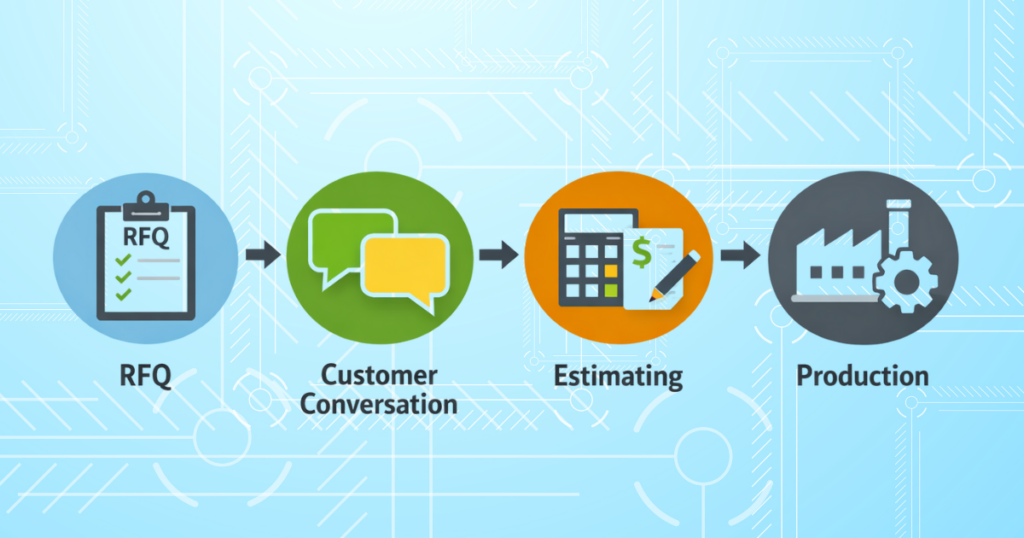
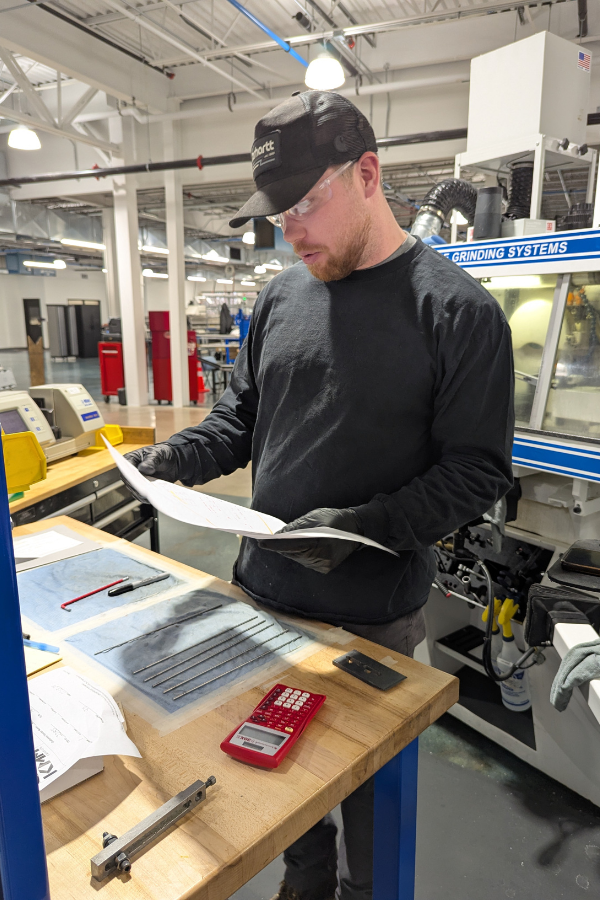
Steve’s role sits in a critical space that most customers never see. Between the RFQ submission and the estimate. Between intention and execution.
His job is to make sure the estimator isn’t guessing.
That means confirming quantities, material, starting size, tolerances, length, surface finish, inspection requirements, cleaning, packaging, and anything that might affect flow on the shop floor.
“Part of my job is to make Josh confident with the information,” Steve said. “So he can set pricing that makes sense for both the customer and KMM.”
This is where Steve’s story clearly connects to Grinding estimator Josh Brodbeck’s. If Josh’s work is where quality gets priced, Steve’s is where quality is protected.
Learning to Say No
Why Fit Matters More than Winning Every Quote
One of the hardest parts of Steve’s job is telling someone their part isn’t a good fit.
“It feels terrible every time,” he admitted. “You feel like you’re losing a potential customer.”
But he’s learned that honesty builds relationships, something more durable and lasting than a single quote.
When he explains why KMM isn’t the right place for a particular job, customers listen. They hear clarity. They hear boundaries. Steve is usually able to point them in the direction of a shop that can do the work for them. And often, they come back later with work that KMM can do.
“That still puts trust in the relationship,” Steve said. “They know we know who we are.”
Speed Without Sacrificing Precision
Handling Urgent Jobs Without Compromising Quality
Urgent jobs still come in. They always will.
The difference is how they’re handled.
Because Steve understands the shop floor, he can sometimes see alternative paths when timelines are tight. Machines that can share load. Sequences that can be adjusted. Ways to move faster without cutting corners.
That flexibility comes more from understanding how things actually work, and not rushing.
“We’re never going to rush a job through and hope for the best,” Steve said. “Our customers demand more and we’ve invested too much in this company for that.”
Evaluating a Precision Grinding Partner
Questions That Reveal True Technical Capability
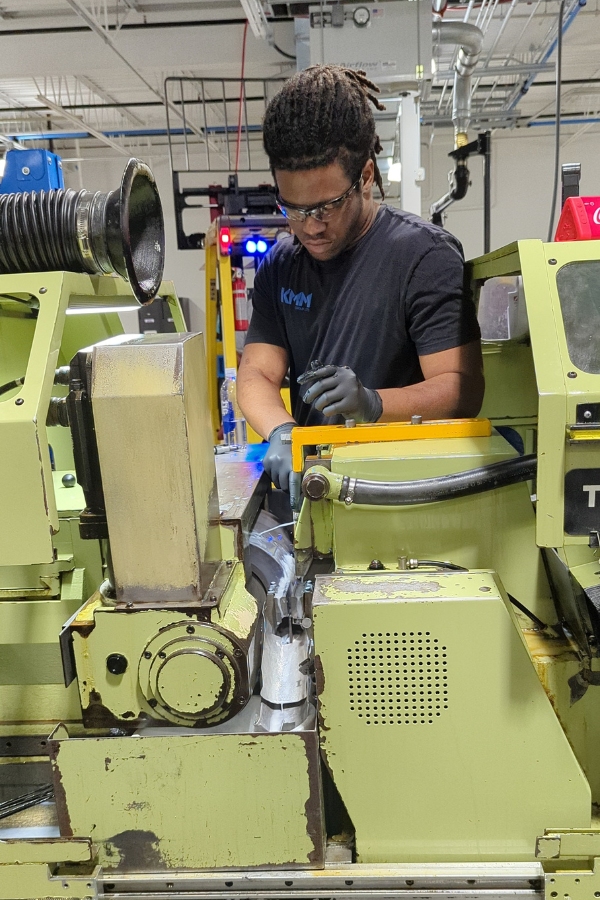
If you evaluate grinding partners purely on equipment or capability lists, you’re missing the most important part of the process.
Consider who talks to you first.
Be mindful of what questions they challenge.
Judge how assumptions are handled before they become problems.
The best grinding outcomes don’t start with machines, but with someone who understands the floor well enough to ask the right questions before the quote is ever written.
Precision Grinding Partner FAQs
Click to Expand
When choosing a precision grinding partner, look for early technical involvement before quoting begins. The right partner will review material condition, tolerances, surface finish, inspection requirements, and part length to confirm feasibility. This upfront evaluation helps prevent rework, delays, and unexpected cost increases during production.
Grinding experience matters before a quote is written because many risks are not visible on a print. Someone with shop-floor grinding experience can identify how material, geometry, and tolerance interactions will affect the process. Addressing these factors early leads to more accurate pricing and more predictable outcomes.
Before estimating a grinding job, key information includes material type and starting condition, part length, tolerance requirements, surface finish specifications, inspection criteria, and quantities. Without this information, estimates rely on assumptions that can lead to delays, pricing adjustments, or quality issues later.
Early technical review reduces risk in precision grinding by identifying potential issues before pricing and production begin. Reviewing feasibility, routing, and inspection requirements upfront allows adjustments to be made early, protecting both cost and quality once the job reaches the shop floor.